Showing posts with label iPhone. Show all posts

Monday, June 12, 2017

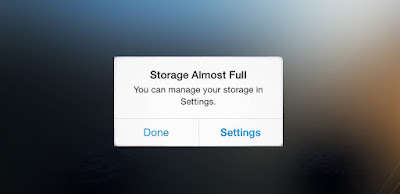
Sick of the "storage almost full" message on your iPhone? Here's how you can free up space in less than 30 seconds!


There's nothing worse than the dreaded "storage almost full" notification and all the panic and anxiety that ensues. Trying to decide which apps to delete can be a daunting task. So if you're short on time, these quick cheats and easy settings adjustments will free up space in your iPhone ASAP. That way you can get back to watching Netflix and reacting to Facebook posts. 

Set your old texts to automatically delete
There's no good reason to save that "hey what's up" message for eternity. But instead of deleting those old garbage texts one by one, simply go to Settings > Messages > Keep Messages. Decide how long you want to keep them around, and your phone deletes the oldies in one fell swoop.

Turn off your photo stream 
Photo Stream combines all the images you've taken on your other devices with the photo roll on your phone, taking up precious MBs. Go to Settings > Photos & Camera, then switch off Photo Stream and revel in those sweet, sweet extra bytes.

Delete your old voicemails 
Go to Phone > Voicemail > Edit, select old voicemails and Delete. Your phone still stores deleted voicemails for no good reason, so make sure that afterwards you scroll down to Deleted Messages > Clear All or all that hard work will have been for nothing

Delete podcasts you've already listened to 
This one's going to be kind of hard to swallow, but it's time to delete Serial off your phone. At this point, you should just assume all parties involved are guilty. Podcasts run around 25 MBs each, so free up some space by going to Settings > Podcasts > Delete Played Episodes.

Clear your browser cache
If you use Safari a lot, it's likely storing a ton of unnecessary web history and data to keep you browser ever-so-slightly faster. Clear that mess in Settings > Safari > Clear History and Website Data. 

Purge your extraneous Instagram photos
You definitely don't need a whole album full of duplicate photos that are already readily available on Instagram. What are you going to do with two pictures of that chicken dinner you made last night? Let it go! Go to your Photos > Edit and delete the Instagram photo album in one go. 

And tell Instagram to stop saving them
This preventative measure ensures Instagram will stop saving photos in a separate album in your Photos app. Open the Instagram app > your profile > Options > unselect "Save Original Photos."

Dump all that offline data 
If you're a Spotify premium subscriber (or pay for similar access to Apple Music or Slacker) you probably save certain playlists for offline listening (so you can rock out underground during your subway commute). But if you're in desperate need of extra space, you'll want to scrap that luxury. There's no on-button-fix-all here; you need to manually uncheck "Available Offline" from any playlist where you've enabled it.
Thursday, November 3, 2016

A folding iPhone could be in your future...Apple has been granted a patent on a design for a bendable phone.

Some have dissed the iPhone 7 for being too similar to the 6S. But a new patent shows that Apple may have an interesting direction for a future iPhone.

The US Patent and Trademark Office granted a patent to Apple on Tuesday for a bendable or foldable iPhone, according to Patently Apple, which was first to report the news. It looks as though such a design has been on Apple's mind for a while. The company applied in 2014 for the patent titled "Electronic devices with carbon nanotube printed circuits," according to the USPTO.

Although a folding iPhone sounds like it could be fun, there's not telling when or if this idea will come to fruition. Samsung, for instance, in April of this year was granted a patent for contact lens augmented-reality displays, but that technology seems awhile away.


This illustration, according to Apple's patent filing, shows a "device that bends along a flexible portion such as a flexible seam associated with a hinge."

Tuesday, February 16, 2016

Do not set the date on your iPhone to January 1, 1970, unless you want a phone you can't use anymore.

There's an ad-like meme going around, designed to look like it's from Apple, telling people that if they set the date on their iPhone to 1/1/1970 and then power off/power back on the iPhone, then it will present with an Easter Egg...a theme that mimics the classic Macintosh look.

People who are claiming to be in the know say that this is a prank, like charging your phone by putting it in the microwave or waterproofing it. This prank will "brick" your iPhone. (Make it unusable).

As cool as this might look, it’s a hoax, and a particularly nasty one at that. Resetting your phone’s date that far back will so thoroughly confuse your phone or tablet’s operating system that you’ll either need to take it to the Apple store for a replacement, or just buy a whole new phone or tablet.

The date bug affects iPhones, iPads and iPod touches with 64-bit processors running iOS 8 or iOS 9. Apple says it’s looking into the bug. Users can protect themselves with a series of tweaks, such as manually setting their time and date, not enabling automatic time changes, and not turning off their iPhone or iPads.

Here's a screenshot of the meme:
 

Thursday, March 12, 2015

Got an extra $17k to burn? Buy this 18 karat gold Apple watch!

Apple expects some iPhone owners to shell out more than $10,000 for a smartwatch. And it hopes they don't care if it becomes outdated in a year.

The Cupertino, Calif., electronics giant on Monday revealed pricing for the three models of Apple Watch, which will be available April 24 in nine countries. The device starts at $349 for the basic Apple Watch Sport version and goes up to $17,000 for the premium Apple Watch Edition.

That huge price gap comes from the use of the materials in the watches - 18 karat gold for the high end edition versus aluminum for the sport edition - but not for any of the actual features. iPhone owners won't be able to do any more with the expensive gold number than with the entry level model (aside from show off their ability to afford a wearable device that costs more than some cars).

By pricing its smartwatch that high, Apple, one of the world's largest makers of smartphones and tablets, is setting itself up as a luxury watch seller. But the transition could be tricky. The computing world is moving faster than ever before, as technology executives like to tell us, and what's new one day may easily be outdated a few months later. Spending $10,000 - $17,000 on a golden gadget that could become obsolete in a year is a risky proposition, especially since we don't yet know if Apple will have a trade in program, how it will support older devices in the future and whether any of the components in the device are replaceable.

History has shown that buying the first generation of a new Apple product often isn't the smartest move. Apple tends to update its products in short order - usually within a year and sometimes even earlier. And it incorporates new features in each update that make the prior model less attractive.

Source: CNET

Tuesday, November 11, 2014

Switch from an iPhone and not receiving text messages? You may still be registered as an iMessage user. Apple has finally released a tool to fix the problem.

Customers who switched away from the iPhones have always had one nagging problem: iMessage. Apple has finally come out with a quick fix for that.

Apple quietly introduced a new tool over the last couple of days that solves one of the biggest headaches for former iPhone owners - lost messages.

The problem begins when iPhone users sign up for iMessage in the first place. The service, which Apple introduced in 2011, helps iPhone users communicate with one another over data networks and Wi-Fi, instead of using text messages on cellular networks. To do this, Apple keeps track of a user's phone number so that when another iPhone user tries to send a message, it can shift to iMessage instead.

What happens if users no longer own an iPhone? Until now, they had to turn off iMessage on their old phone before turning on a new Android / Windows Phone / Blackberry device. Some users, however, have said turning off iMessage doesn't always solve the problem.

Unhappy and former iPhone owners have sued Apple over the issue, stating that they fell into a void where iMessage texts do not travel. Worse, the sender usually thinks the message was delivered even though it never was.

Apple's new tool includes step-by-step instructions for unregistering iPhones still in the possession of their former users. And for those who longer have their iPhone, the page includes an option for typing in their phone number and receiving a confirmation code that can be entered to confirm their choice.

Find more information and unregister your number at this link: https://selfsolve.apple.com/deregister-imessage

Tuesday, November 4, 2014

Stay at Starwood hotels regularly? You will soon be able to use your smartphone to gain access to your room.

Forget losing your hotel key card in the small hours of the morning and facing a night sleeping in the corridor - thanks to a new Bluetooth connected app, guests at Starwood Hotels will soon be able to access their room using their smartphone.

Starwood Hotels, owner of more than 1,200 properties across the world, has announced the rollout of the feature for 10 of its hotels, with keyless access expected to roll out across all Aloft, Element and W Hotels in 2015.

The keyless entry works on Bluetooth LE enabled iPhones and Android smartphones thanks to the company's free SPG App. Guests simply sign up through the app, and when they checkin for their booking they will have the option to use SPG Keyless to access their room. Getting into the room is as simple as holding the phone up to the Bluetooth panel on the door and waiting for the green light.

The app also allows guests to view the details of their stay and receive push notifications on the status of their room, such as information on upgrades. But the biggest bonus is the time saved - visitors will be able to bypass the front desk when they get to their hotel, taking control of everything through the app.

Starwood Hotels promises advanced security, partnering with smart lock company Assa Abloy to ensure that specific room keys only work on specific phones and allowing digital keys to be wiped if a phone is lost.

Starwood's move is part of a worldwide shift towards smart hotel technology, with Hilton Hotels rolling out smartphone technology that allows users to enter their room without a key and even choose their room off the floor plan before they arrive.

Source: CNET

Friday, September 19, 2014

Upgrading to iOS 8? Avoid the iCloud Drive bugs.

The new iPhone 6 is here! As usual, with a new iPhone comes a new operating system release. For those of you downloading iOS 8, you may want to avoid using iCloud Drive. After you download iOS 8 and you begin the setup process, at some point you're going to be given the option of signing into iCloud Drive. We recommend you do not do it, as it's not meant to work properly until Apple releases the new Mac operating system.

If you use iCloud to sync documents and other things between your phone and your computer (as most people do) you will lose that sync ability if you activate iCloud Drive today. You can wait on it until October 21st - the date Mac's new operating system, Yosemite, is released. It is important to know that iCloud Drive, once activated, can't be reversed - you can't turn it off and go back.

Over all, iOS 8 is without question the most comprehensive, detailed upgrade that Apple has ever offered to its iPhone / iPad software. You are probably going to need to find somebody that can give you a tutorial on this. There are things throughout this operating system that, if you just wait to discover them, could take you six months to go through them all or find them all.

Thursday, September 18, 2014

3 things to consider before you install iOS 8 on your iPhone.

Apple's latest mobile operating system, iOS 8, is live and available for download & installation now. All you have to do is go to Settings > General > Software Update to make it happen. But wait!

1) Make sure you back up your phone before updating.
This is really important and something most people ignore. Then you start crying when the install freezes and suddenly you lost all of the pictures of your cat with that cute little vest on. Forever. You'll never see those pictures of Mr. Tinkle again. You don't know how your phone is going to act during the installation and you don't know what kind of hidden glitches may be in the new operating system. It's likely ok, but it's better to be safe than sorry. Always back up your phone!

2) Don't put iOS 8 on your iPhone 4 / 4S.
The update is available for you, but don't do it. (Frankly, you shouldn't have installed iOS 7 either). The older phone just doesn't fill the hardware requirements of the new OS and the performance suffers significantly because of that.
If you like your 4S, keep it. But don't expect any changes coming your way. It will be just like it is today - forever

3) Realize that install of iOS 8 needs 5.8GB of space.
Delete whatever music, videos, pictures, or applications you need to in order to make the switch.

If you're planning on buying the iPhone 6 tomorrow, you should keep this in mind as you make your selection of which version to purchase. Those of you going the cheaper route and getting the 16GB model are only going to have a little over 10GB of space available to play around with, which isn't a whole lot when all your photos, videos, and music are restored.

Friday, June 6, 2014

Big changes are coming to the iPhone messaging platform.

Apple's next mobile operating system means significant changes for how iPhone users send and receive messages.

If you're an Apple user, this is a big deal. Messages is the most frequently used app in iOS, and is how most users share texts, photos and videos with each other.

With iOS 8, coming this fall, Apple is borrowing features from popular messaging platforms like Snapchat and WhatsApp while unveiling some new tricks of its own.

Here's a quick look at the new messaging features announced at Apple's Worldwide Developers Conference...

Audio and video messages
The text window in the next version of iMessage will contain a little microphone button. Users hold a finger down on the button, record a short audio or video message, and send it with the swipe of a finger, all without leaving the app.

In this way, Apple is taking a page from WhatsApp, which also allows audio and video messages. Facebook bought that startup, which has a huge user base overseas, in February for $19 billion.
Audio files will appear in your Messages stream as jagged lines. Simply tap on them to listen to the message. Apple did not say Monday whether there will be a limit on the length of the messages.

Self-destructing messages
Photo and video messages that disappear after a few seconds have been popularized by Snapchat, the mobile messaging app that reportedly spurned multibillion takeover offers from Facebook and Google last year.

This ephemeral format has been especially popular with teens and young adults who like to exchange silly or racy messages without fear they'll be haunted by them later.

Now Apple is getting into the game. Audio and video messages within iOS 8 will automatically vanish within a few minutes unless you adjust your settings.

"You don't want to have to clean these up. Audio and video messages can take up space," said Greg Joswiak, head of iOS product marketing. "So they're set to self-destruct unless you choose to keep them."

Do not disturb
Sure, group messaging threads among friends can be fun. But sometimes all the back-and-forth chatter gets out of hand.

This feature lets you mute a thread for a while while reserving the option to rejoin the conversation later.

If you've ever been on one of those noisy threads that just keeps buzzing in your pocket, now you will be able to choose when to leave.

Lock-screen functions
If you're in a hurry, responding to a message on an iPhone can be a little cumbersome: You have to punch in your passcode and then hit the Messages icon just to get started.

With iOS 8, users can listen and respond to audio messages without leaving the lock screen -- just by holding the phone to their ear. The phone detects when it's next to your face, plays the message and lets you record a brief response. Lower the phone, and the message is sent automatically.
 
Other stuff
If your contacts choose to share them, their locations will pop up in group-messaging threads.
For the first time, users will be able to add or delete someone in the middle of a group-messaging thread.

And message attachments - images and videos mostly - will be collected in one place so you don't have to scroll back through longstanding threads to find them.

Source: CNN Tech

Friday, May 9, 2014

Out of storage on your iPhone or iPad? Here's how to add more space cheaply.

Apple's devices infamously rely on fixed storage. If you need more space, well, too bad.

Granted, you can try a utility like PhoneClean, which can reclaim some space , but that gets you only so far. For any kind of significant storage boost, you have little choice but to upgrade to a more capacious iPhone, iPod, or iPad.

Unknowingly to many, you do have one other option. A growing number of devices give you extra space for music, movies, photos, documents, and other data, and some of them are surprisingly affordable. How? With wireless card readers (also known as media hubs), which connect via Wi-Fi to your devices. So instead of popping a microSD card inside your iPhone or iPad (which, of course, is impossible), you pop one into an external drive you can keep stowed in a bag, pocket, etc.

Suppose, for example, you're taking a long trip. You want to bring along your entire music library, not just the handful of playlists that fit on your 16GB iPhone 5, and enough movies to last you through two or more long flights.

With one of these readers, you can stock, say, a 32GB SD card with more than enough songs and videos, while still leaving space on your Mini for apps and other stuff. And several models support USB flash drives as well.

Here's how most of these devices work:
Step 1: Connect the reader to your PC, then fill it with any and all media/data you want to bring along.
Step 2: Install the companion app that goes with the reader.
Step 3: Run the app, then connect to the reader. Now you can stream your media, view your photos, access your documents, transfer files, and so on.

One key feature to look for when shopping for a wireless reader is a pass through option, which allows your device to stay connected to a Wi-Fi network while simultaneously connected to the reader. Otherwise it's a huge hassle to disconnect and reconnect all the time.

IES currently offers two products that will help you with your storage needs:

The Iogear MediaShair Hub sells for only $99.95. It is no larger than a deck of cards, looks like a miniature router, and can double as a mobile access point. The MediaShair accommodates both SD cards (or microSD with an adapter) and USB drives. It works quite well with iOS devices, even if its app is a little clunky to use and not great as a music player. You can even top off your iPhone's battery by plugging directly into the MediaShair's USB port.

Our other option is the RAVPower FileHub 5-in-1, which sells for $74.95 and includes a larger battery than the MediaShair. It offers both Wi-Fi hot-spot and NAS features, and works with both SD or microSD cards, and USB drives.

In an ideal world, Apple devices would have expansion slots. Why pay monthly for cloud storage when all you need is a $75-$100 card reader and some inexpensive memory cards / flash drives?

Interested? Find out more about these two products using the links below:

Tuesday, December 3, 2013

Can't remember 4 digits to unlock your iPhone? No problem - use your face!

Awarded to Apple on Tuesday by the US Patent and Trademark, a patent called "Personal computing device control using face detection and recognition" envisions a method to access your iPhone and other devices based on facial detection and recognition. As such, your face would act as a password, allowing only you to answer a phone call and perform other tasks.

The technology would start by scanning your face in order to record all of its unique features, such as texture, color, size, and shape. You could run the same process for any other person whom you want to use your iPhone.

In response to an incoming call, your phone would scan your face to make sure it matches that of an authorized user. If so, the call goes through, and your iPhone displays the usual incoming call screen. If not, the device remains in lock mode with only the ringtone chiming away.

The same security could apply for incoming e-mails. Looking at the iPhone would alert you to and display an e-mail. An authorized face would prevent the e-mail alert and hide or block the actual message.

The technology seems most at home on a mobile phone. But Apple's patent points to its use on other devices, including TVs, PDAs, and personal computers. As one example, your PC's screensaver could react to your face rather than to a preset period of inactivity.

An approved patent doesn't necessarily mean this technology will become a reality. But Apple did take a first step in password evolution with the introduction of its Touch ID fingerprint sensor on the iPhone 5S. Facial recognition is already used by other products, such as Microsoft's Kinect and Sony's PlayStation. So using your face to drive your iPhone seems like a logical step at some point down the road.

Source: CNET

Monday, October 21, 2013

Apple's iMessage security is a myth.

Apple's iMessage instant messenger service, which has made headlines for being uncrackable by law enforcement, is not so secure after all, according to Quarkslab.

An internal document from the United States Drug Enforcement Administration published by CNET in April stated that it was impossible to intercept iMessages between two Apple devices.

"As Apple claims, there is end-to-end encryption," Quarkslab researcher Cyril Cattiaux said. "The weakness is in the key infrastructure as it is controlled by Apple they can change a key any time they want, thus read the content of our iMessages."

Further, metadata about messages is sensitive, Cattiaux pointed out -- and Apple has that metadata.

Apple insists that iMessage is not architected to let it read messages and insisted that Quarkslab discussed theoretical vulnerabilities that would require Cupertino to re-engineer the iMessage system to exploit it, something the company does not plan to do.

"At the 10,000-foot level, Quarkslab's technical argument is that it is possible to reverse-engineer Apple's encryption technology," Randy Abrams, a director of research at NSS Labs, told TechNewsWorld.

However, the effort required "is such that you already have to be a person of extreme interest to some group somewhere in the world with a high level of technical expertise, and be worth the investment of time and effort," he continued. "No average user, or even crook, is likely to be worth the effort."

Source: Tech News World

Tuesday, September 24, 2013

New Android software lets users unofficially tap into Apple's iMessage service, with security concerns.

A functional version of Apple's iMessage has arrived on Google's Android platform, though not with Apple's blessing, or without potential security risks.

The software is called iMessage Chat and was created by developer Daniel Zweigart. Users enter their Apple ID and password credentials and can text with registered iMessage phone numbers and e-mail addresses freely.

Per iOS developer Adam Bell, the service appears to be tricking Apple's iMessage server into thinking it's a Mac Mini -- Apple's entry level Mac desktop -- in order to send and receive the messages. Jay Freeman, the creator of the third-party App Store alternative Cydia believes the app is piping the data through Chinese servers as well.

We are urging all Android users to avoid installing this software or offering their Apple ID account credentials.

What is iMessage?
Apple introduced iMessage alongside iOS 5 in 2011. The messaging service lets users on iOS devices and Macs chat with one another like they would send a text message. The service is not tied to any carriers and has been designed to work on non-cellular devices like Wi-Fi-only iPods and iPads.

The iMessage protocol has remained exclusive to Apple devices since its debut, mainly serving as a way to keep users locked into Apple's ecosystem of devices. BlackBerry used a similar tactic with its BBM service, which was set to arrive on iOS and Android devices this past weekend, but now faces a delay.

Source: CNET

Thursday, September 19, 2013

Attention iPhone & iPad users...do NOT update to iOS7!

Just because your device is compatible doesn't mean it should be upgraded right away. Once you update your device to iOS 7, there is no going back to iOS 6 or whichever earlier iOS you were running. (Yes, it is possible, but extremely difficult and time consuming).

If you are not in a rush, wait a few weeks or months until Apple releases the first updated version of iOS 7. The early releases of the operation system can include bugs that should be addressed with subsequent iOS 7 updates. Let other eager people spend the next few weeks finding and reporting these issues so you don't have to deal with them.

Older devices can experience frustrating performance issues when upgraded to a new OS. The iOS 7 software was designed specifically for the hardware that's faster than your trusty old iPhone 4. If your device is anything older than the most recent generation, it might suddenly slow down, and battery life can suffer.

For right now, we are encountering memory issues

Read more at: http://www.heavy.com/tech/2013/09/ios-7-download-bugs-memory-glitches/
For right now, we are encountering memory issues

Read more at: http://www.heavy.com/tech/2013/09/ios-7-download-bugs-memory-glitches/
So far, here are the issues that have been reported to IES:
  • Apps reported to be slow - or in some cases, no longer working or randomly crashing.
  • Jailbroken iPhones no longer function as jailbroken.
  • Battery life has decreased.
  • Bug while using the keyboard - difficult to type.
  • Devices are lagging and automatically rebooting.
WE STRONGLY URGE ALL OF OUR CLIENTS TO HOLD OFF FROM DOWNLOADING IOS7. If you are eager and must do so, please remember to backup your device.
For right now, we are encountering memory issues

Read more at: http://www.heavy.com/tech/2013/09/ios-7-download-bugs-memory-glitches/cvd

Monday, September 16, 2013

Apple's iPhone trade-in program has officially launched.

On Friday, Apple officially launched the iPhone Reuse and Recycle Program, giving iPhone owners the option to trade in their old handsets for a discount of up to $280 on the upcoming iPhone 5S or other new iPhone models. The announcement first came in the form of a tweet from CNBC, which confirmed with Apple that trade-in program will roll out in nationwide on Friday and will require customers to leave the Apple Store with a new contract in order to take advantage of the offer. Any model of the iPhone can be traded in for store credit, but it is worth keeping in mind that the potential savings will likely be only a fraction of what other third-party companies can offer. Apple has partnered with Brightstar for the trade-in program in the U.S., and the initiative is expected to expand next month.

Source: BGR

Thursday, September 12, 2013

Apple announces iPhone 5S, iPhone 5C, iOS 7 release date.

Apple unveiled an update to its popular smartphone on Tuesday at a press event at the company's headquarters in Cupertino, Calif. The tech giant announced the iPhone 5S and iPhone 5C -- two very different phones.

Apple chief executive officer Tim Cook started off by saying, "In the past, when we've launched a new iPhone, we lowered the cost of the old iPhone, making it more accessible to new people. But this year, we're not going to do that."

Instead, Apple introduced a lower-cost iPhone 5C alongside the iPhone 5S -- the company's flagship smartphone.

Apple senior vice president Phil Schiller took the stage to announce the iPhone 5C. The new device is made of plastic and has a 4-inch display. It has a hard-coated polycarbonate design, is steel reinforced and has a multi-band antenna. It comes in five colors: green, white, blue, pink, and yellow.

The iPhone 5C will cost $99 for a 16GB model or $199 for a 32 GB model, with contracts. A colorful variety of cases will cost $29. The iPhone 5C will go on sale on Sept. 20, with pre-orders starting on Sept. 13.

The iPhone 5S has a 4-inch display and comes in silver, gold and a color called space gray. The hardware has been upgraded to an A7 chip, and is the first smartphone to be 64-bits.

"The PC world made the transition from 32 bit to 64 bit and it took years. Today you're going to see that Apple is going to do it on one day," Schiller said.

Schiller says the iPhone 5S's CPU performs 40 times faster than the original iPhone. The new iPhone will also include a brand new chip called the M7, which is said to continuously measure motion data. The chip supports the accelerometer, gyroscope and compass.

Schiller says the iPhone 5S's battery life has improved, and will have 10 hours of LTE and Wi-Fi browsing, 40 hours of music and 250 hours of standby time.

The iPhone's camera is getting a major upgrade. Apple is increasing the pixels to 1.5u to capture more light. The camera will also autodetect white balance as soon as the app is launched, and include burst mode and true tone flash. It also features a new image stabilizer and slow-motion video.
Just as the rumors suggested, the new iPhone will include Touch ID -- a fingerprint sensor built into the home button. The sensor scans sub-epidermal skin layers and will have 360-degree readability. It is about 170 microns thin, with 500 ppi resolution. The fingerprint sensor can be used to unlock the iPhone or make purchases.

"Your fingerprint is one of the best passes in the world. It's always with you, and no two are exactly alike," Apple senior vice president Jony Ive said in a promotional video.

The iPhone 5S will come in three models: 16 GB for $199, 32GB for $299 and 64GB for $399, with a contract. The phone will go on sale on Sept. 20.

Apple also announced details of its completely redesigned mobile operating system, iOS 7, that will be ready for download on Sept. 18.

Source: CBShttp://www.cbsnews.com/8301-205_162-57602236/apple-announces-iphone-5s-iphone-5c-ios-7-release-date/

Thursday, September 5, 2013

Own an Apple device? Get ready for the iOS 7 release Tuesday.

Like it or not, your Apple mobile device is going to look and act differently within a few weeks.

On Tuesday, Apple will introduce the latest iPhone, and part of the tradition of the new device introduction is an operating system update that, at some point, most of us upgrade to. So even without springing for the new phone, your older iPhone gets a free new coat of paint — and potential pain — with tools in different places and different ways to access apps.

Unlike past upgrades, iOS 7 is a from-the-ground-up overhaul. Apple CEO Tim Cook calls it "the biggest change to iOS since the introduction of iPhone" in 2007.

Basic functions have been altered. For instance, to go from one e-mail to the next, instead of swiping to the left or right, you swipe upward and downward. For consumers, "It'll be a little shocking at first," says Evan Spiridellis, who runs the JibJab e-commerce company with brother Gregg. "It's a totally new feel."

Developer Joel Housman of Alexandria, Va., says consumers will also scream loudly, in the negative, upon the iOS 7 release, much as "every time Facebook makes an interface change, they complain about it."

It takes most consumers time to learn the intricacies of a new device, he says. The iOS overhaul will force folks "to learn how to do things differently" even on their current phones.

There are 600 million Apple mobile devices in use worldwide — including just over 60 million of last year's new model, the iPhone 5. So way more people will upgrade to the new operating system then pick up the new phone, which is expected to be in stores by the end of September. The last update was widely accepted: IOS 6 is installed on more than 93% of Apple devices, according to the company. The new update works on devices back to the iPhone 4, the iPad 2 and fifth-generation iPod Touch.,

Apple will begin reminding folks, when iOS 7 is available, that it's time to upgrade the software.
The iOS 7 launch comes in a year when Apple's once-strong lead over competitors has begun to fade. Google's Android — and the hot-selling Samsung Galaxy series of smartphones — now dominate worldwide, although the iPhone has the edge here in the United States.

Beyond a new coat of paint and stylistic upgrade that will see buttons and icons in new places, look for:
  • Instant app updates. In the past, you had to manually update each app when changes were offered. Now they'll be done automatically in the background. 
  • Control Center. The eight most commonly used features will reside on the Control Center screen, which can be accessed by one quick swipe. So instead of going to the Settings icon, opening it up and turning on Wi-Fi or Bluetooth, you'll find those options in Control Center, along with Flashlight, Camera, clock and calculator. 
  • Instagram-like features in the camera app. Filters to pretty-up photos are added, along with the ability to shoot photos in a square format. That means you won't have to crop your pictures anymore for inclusion in Instagram.
Van Baker, an analyst at Gartner, says Apple had to make the software change. "The trade press was getting very negative to how stale and old-looking iOS was," he says. "In truth, most users don't care. Nonetheless, it was worthwhile to do it and give it a fresh new look."

And Gregg Spiridellis says despite the pain some consumers might feel initially, it will be worth the upgrade. "It feels like you have a new phone," he says. "It's that freshness of getting something new, even though you didn't have to pay for it."

Source: USA Today

Thursday, August 8, 2013

Ever wanted to hunt ghosts? It's simple! Just grab your iPhone and this 99 cent app...

Ghost hunters Roger Pingleton and Jill Beitz, founders of StreamSide Software, have developed an iPhone app they say gives the dead a voice.

In developing the Spirit Story Box app (99 cents to download at the Apple app store; there is no Android version), Pingleton said his goal was to improve on other paranormal apps for the iPhone.
"Bottom line is we wanted people to have fun with it," Pingleton said.

Beitz, Pingleton and about a dozen others recently used Spirit Story Box to search for ghosts at the Wayne County Historical Museum in Richmond.

"They had a blast with it," Pingleton said. "They had numerous words spoken that related directly to the areas where they were hunting."

The Spirit Story Box app picks up changes in random electrical noise to select words from a preprogrammed vocabulary.

When the app hits on something, it comes out of the iPhone as a spoken word.

Some paranormal investigators think the spirits can manipulate random streams of data. Scientists, of course, denounce the idea.

The app, like myriad other devices that claim to detect or communicate with spirits, cannot be proved to work.

Wanda Lou Willis, 75, a folklore historian and author from Indianapolis, has researched the supernatural and haunted locations for several books. She said many people believe that electronic devices can be tuned to communicate with spirits.

"Electricity seems to attract the spirits," Willis said. "Human beings have a lot of electricity in our bodies. It is believed that when we pass over, our spirit becomes something in the universe, sort of an electrical current."

Skeptics, and there are many, say devices and programs like the Spirit Story Box iPhone app are neatly packaged random word generators. Any connection the selected words or phrases bring forth, critics say, is found solely in the minds of gullible users.

For every critic there's a believer. A 2003 Harris Poll found 51percent of the public believes in ghosts.

"There is nothing in this world that doesn't exist for someone, somewhere, at some time, including being able to connect with and contact a spirit," Willis said. "You have to have your mind open to it to have it really happen."

Source: USA Today

Monday, June 17, 2013

Apple smartphone users rejoice...Microsoft Office for iPhone has arrived!

Microsoft Office, the suite of productivity tools used by millions, has finally come to the iPhone.

The move is a significant one for Microsoft and its users. Before, the popular set of tools, including Word, Excel, PowerPoint and Outlook, was available only on Windows phones, which have captured a sliver of the smartphone market.

The feature is available free in Apple's App Store for subscribers to Office 365, the cloud-based version of Office's business-like tools for home users. Subscribers pay a monthly fee.

Office for iPhone is intended for people who need to edit PowerPoints or Excel spreadsheets on the go, not create them from their phones. The company said users can work with documents on their phones, and the updates will be transferred to those documents on PC versions. They'll also be able to share documents from their phones.

"When we launched Office 365 earlier this year, we committed to delivering regular updates and new capabilities to Office 365 subscribers," Julia White, general manager of Microsoft's Office division, said in a blog post. "Office Mobile for iPhone is another great example of the value of subscribing to Office 365."
The announcement comes just days after Apple announced that its own iWork productivity suite will for the first time work with Windows systems.

The Microsoft announcement serves as a counter, allowing the same kind of back-and-forth for the larger number of users who are already familiar with Office, considered by many the gold standard of productivity software.

There is no similar version of Office optimized for the iPad, which has its own more fully developed Web browser. Microsoft also did not mention whether it's developing a version for Google's Android mobile devices.

Office for iPhone is available now for users in the United States and will soon rolled out internationally, the company said.

Source: CNN

Thursday, June 6, 2013

In recent Apple vs Samsung news...Samsung has won!

Apple won the biggest battle in its endless patent war with Samsung, but now it's Samsung's turn to be victor. A trade agency ruled Tuesday that several older Apple products violate a Samsung patent and can't be sold within the United States.

The International Trade Commission's long-awaited ruling bans Apple from importing or selling the AT&T compatible models of the iPhone 4, 3GS and 3, as well as the AT&T 3G-connected versions of the iPad and iPad 2.

Those products, which are assembled overseas and must be imported, infringe on a Samsung patent for encoding mobile communications, the ITC ruled.

The ban does not affect the newest generation of Apple's products, the iPhone 5 and the fourth-generation iPad, which use different technology than the earlier devices.

The commission did not find that Apple violated any of the three other patents Samsung named in its case. But the rest of the ruling is a big blow to Apple and it comes as a surprise, given that a previous preliminary ruling from an ITC judge exonerated Apple completely.

This time, the "determination is final, and the investigation is terminated," the ITC wrote in its decision. Apple can file an appeal with the Federal Circuit, however, and spokeswoman Kristin Huguet said the company plans to do just that.

Apple can also hope for a veto from President Obama. The ITC is required by law to send its "exclusion orders" to the president for a 60-day review. Unless President Obama actively strikes down the order, it becomes final.

Because Apple plans to appeal, Tuesday's decision "has no impact on the availability of Apple products in the United States," Huguet said.

She slammed Samsung for "using a strategy which has been rejected by courts and regulators around the world" in other cases. She also accused Samsung of trying "to block the sale of Apple products by using patents they agreed to license to anyone for a reasonable fee."

A Samsung spokeswoman fired back that the ITC's ruling "has confirmed Apple's history of free-riding on Samsung's technological innovations." AT&T declined to comment.

Last year, a California jury found that several Samsung products infringed on Apple patents for software features like double-tap zooming and scrolling. The jury initially recommended that Apple be awarded more than $1 billion in damages. A final ruling in that separate case isn't expected until later this year.

How's that sweet revenge taste, Samsung?

Source: CNN